
Drain Cleaning in Mission Viejo
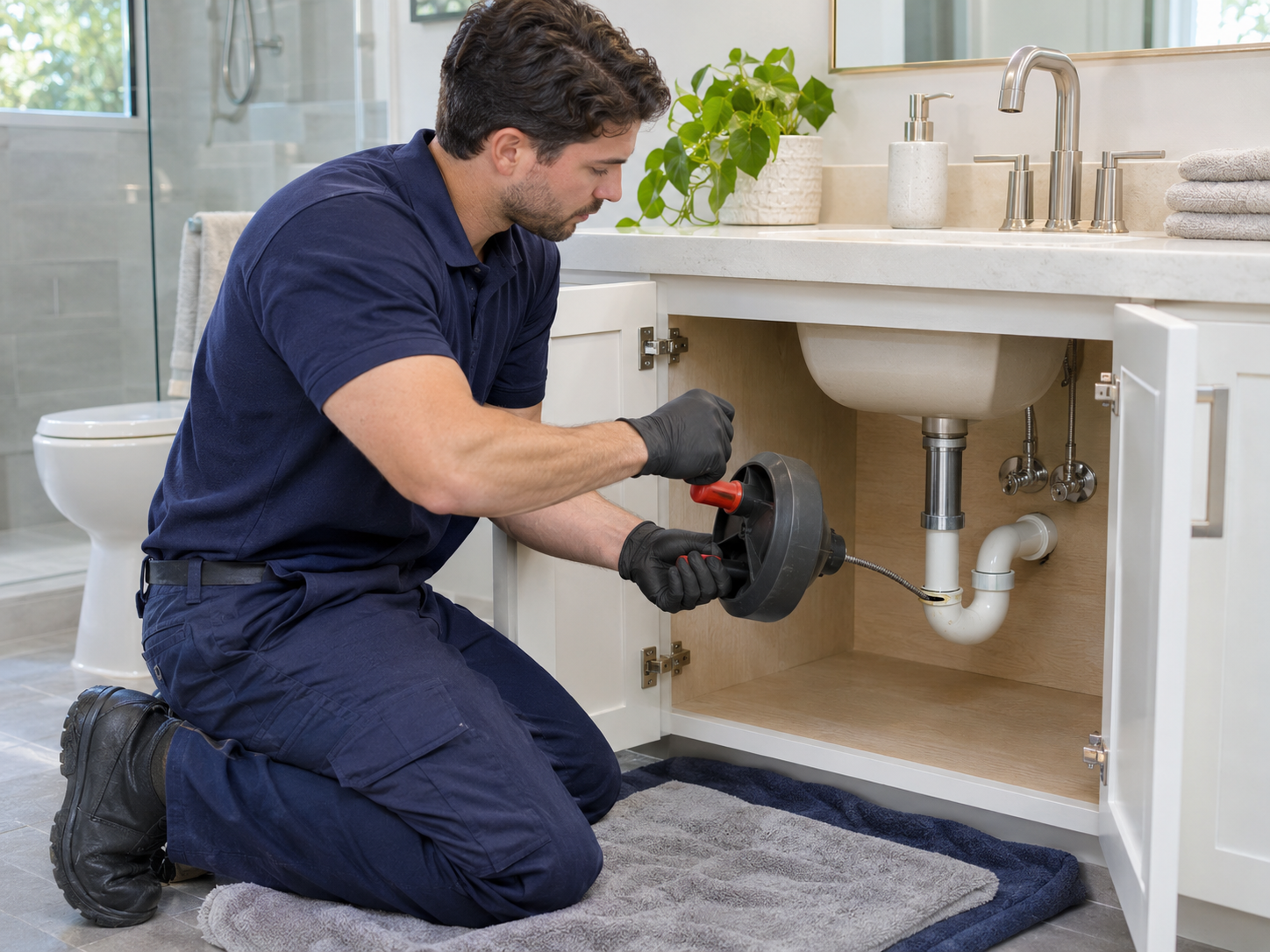
A slow sink, a tub that holds water or a toilet that gurgles each tells a different story about where a drain is restricted. We clear the clog and work out why it formed, so you are not calling about the same drain again next month.
- Kitchen, bath and laundry drains
- Cause explained after clearing
- Recurring clogs investigated
Clogged drain symptoms by fixture
Where a drain slows down, and what else happens at the same time, helps narrow down the likely cause before any tools come out.
| Fixture | What you notice | Common cause | Worth knowing |
|---|---|---|---|
| Kitchen sink | Slow draining, standing water, odor from the disposal side | Grease and food residue coating the line | Hot water alone rarely clears hardened grease for long |
| Bathroom sink | Gradual slowdown over weeks | Hair and soap trapped at the stopper or in the trap | Often a local clog close to the fixture |
| Tub or shower | Water pooling around your feet | Hair, soap film and buildup in the trap | If the toilet gurgles at the same time, the issue may be farther down |
| Toilet | Weak flush, water rising high in the bowl | Paper buildup or a foreign object | Repeated toilet clogs alongside other slow drains point downstream |
| Laundry standpipe | Overflow during the washer's drain cycle | Lint buildup or an undersized or restricted line | The surge of water from a washer exposes partial clogs |
One slow drain versus several fixtures backing up
This is the most useful distinction in drain troubleshooting. When a single sink or tub is slow while everything else in the house drains normally, the restriction is almost always in that fixture's trap or the short branch line connecting it to the rest of the system. These are usually straightforward to clear.
When several fixtures are affected at once, the picture changes. A tub that fills with water when the toilet is flushed, or a floor drain that bubbles while the washing machine empties, means wastewater cannot get past a point that those fixtures share. That shared point may be the main building drain or the sewer line leaving the house. Clearing one sink will not help, and continuing to use water can push wastewater out of the lowest opening.
How we clear drains
The right method depends on the fixture, the pipe and what is causing the blockage. We start at the most accessible point and work toward the restriction.
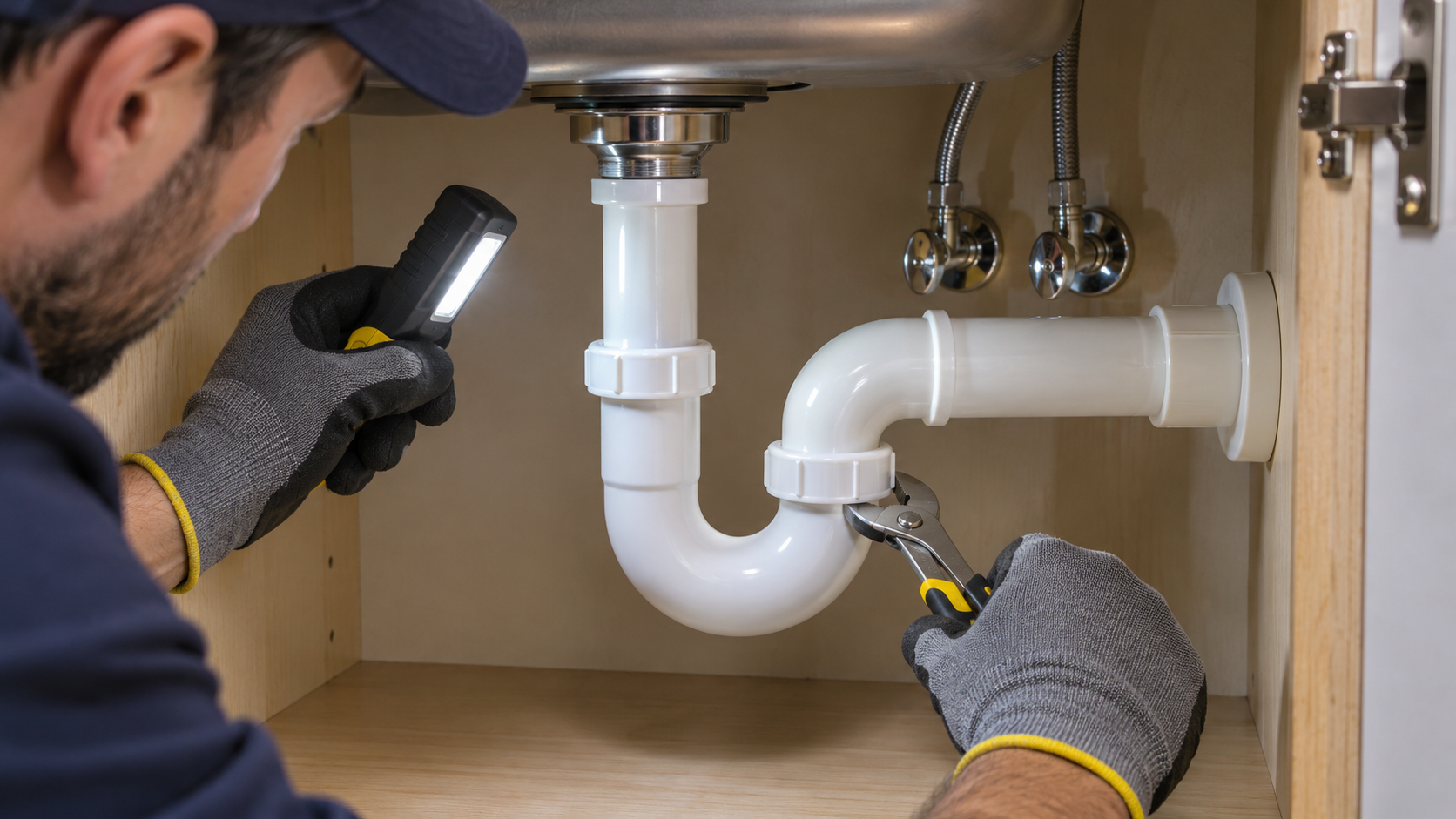
- Trap and stopper cleaning for bathroom sinks and tubs, where hair and soap often collect within reach.
- Mechanical clearing with a drain cable, sized for the line, to break up and retrieve material farther down.
- Clearing through a cleanout when one is available, which gives better access to the main line without working through a fixture.
- Flow testing after clearing, running water at normal volume to confirm the drain keeps up.
We avoid recommending harsh chemical drain openers. They can sit in a blocked pipe, damage some materials and make the line hazardous to work on.
When a camera inspection may be considered
For most single clogs, clearing the line and testing it is enough. A camera inspection may be considered when a drain keeps clogging, when what comes back on the cable suggests roots or pipe fragments, or when the location of a restriction is unclear. Seeing inside the line can show whether the pipe has a sag that holds debris, an offset joint or buildup that needs a different approach.
Keeping drains clear between visits
Simple habits make a real difference. Wipe grease from pans into the trash before washing, use strainers in sinks and showers, and flush only toilet paper. If a drain begins to slow again, deal with it early rather than waiting for a full stoppage. These steps are part of the broader care we recommend through our residential plumbing services for Mission Viejo households.
Is one drain slow, or several?
Tell us which fixtures are affected and we will help you decide on the next step.
When findings point to a different problem
Sometimes what we find while clearing a drain shows that the real issue lies elsewhere. Here is where those findings usually lead.
Roots, pipe fragments or a blockage past the house
Material like this suggests damage or intrusion in the main line rather than a simple clog.
Sewer line repairWater under the sink that is not from the drain
Moisture from supply connections or valves is a pressurized leak, not a drainage problem.
Leak detection and repairA toilet that clogs with normal use
A worn flush mechanism or a fixture with a weak flush may be the cause rather than the drain line.
Toilet and faucet repairDrain cleaning questions
Answers about recurring clogs, different kinds of drains and when to stop using a fixture.
A recurring clog usually means the original cause is still there. Buildup may have been pushed through rather than fully removed, the pipe may have a low spot or rough interior where debris collects, or the restriction may sit farther down the line than the fixture where you notice it. When the same drain needs clearing again within weeks or months, a closer look at the line is more useful than another quick fix.
They tend to have different causes. Kitchen lines mostly struggle with grease, food particles and soap that harden along the pipe wall, so the goal is to remove that coating as well as open a path. Bathroom sinks and tubs collect hair bound together with soap residue, often close to the drain opening or in the trap. Toilets typically clog from too much paper or items that should not be flushed.
Stop using it if water rises instead of draining, if running one fixture makes another back up, or if you see or smell wastewater. Continuing to send water down a blocked line can cause an overflow and spread contamination. For a single slow sink that still empties, light use is usually fine until it can be cleared, though it is worth scheduling soon.
Other plumbing services homeowners often need
Request drain cleaning
Let us know which drains are slow or backing up and how long it has been happening. We will help you figure out the next step and check availability.