
Toilet & Faucet Repair in Mission Viejo
A running toilet, a faucet that will not stop dripping or a damp cabinet under the sink. Fixture problems are among the most common in any home, and most come down to a worn seal, valve or connection. Use this guide to match your symptom, then let us handle the repair.
- Toilets, faucets and shutoffs
- Wear parts matched to the fixture
- Honest repair or replace advice
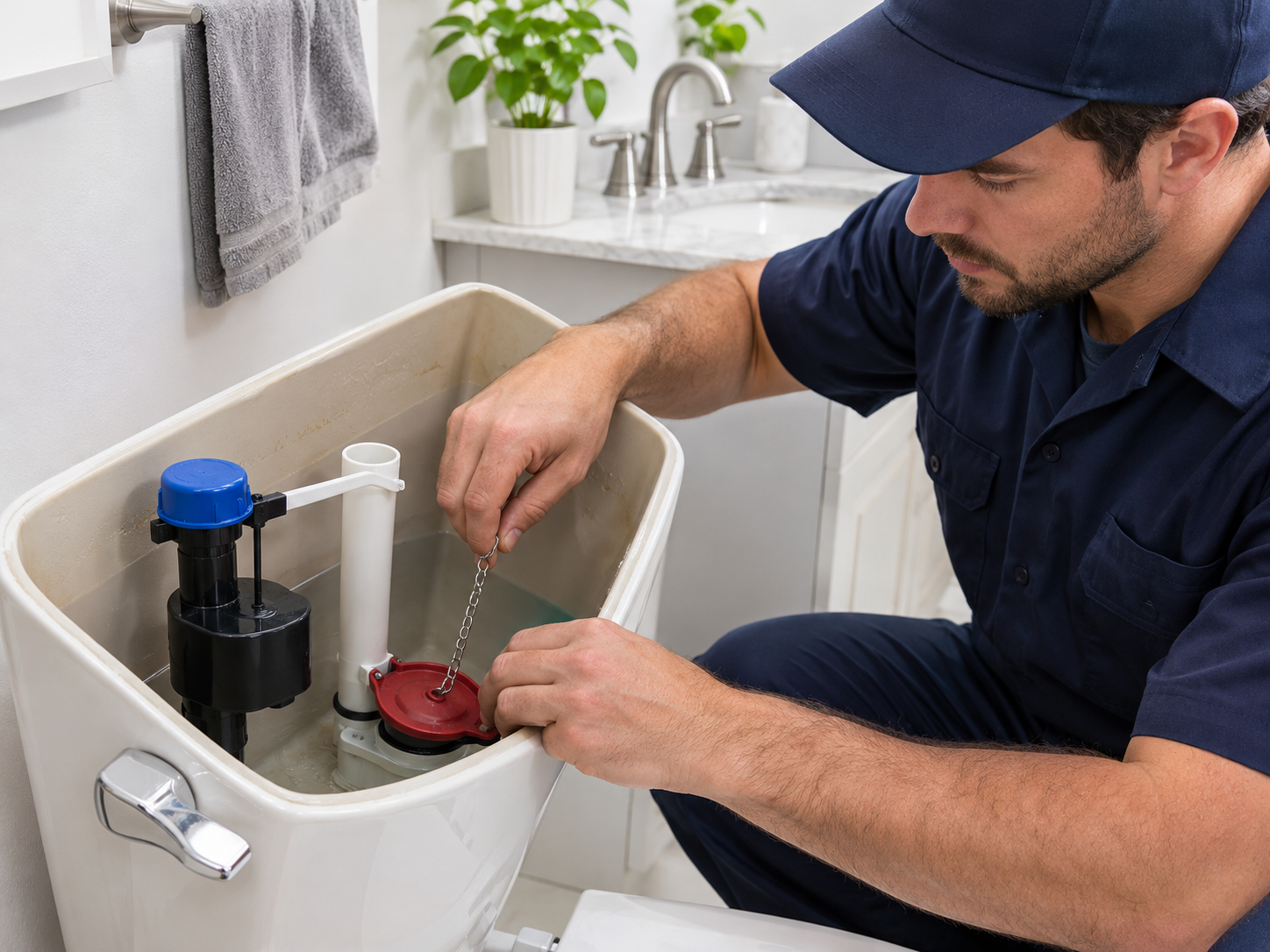
Match your symptom to the likely cause
Each fixture has a handful of parts that wear out. Knowing which one is behind your symptom helps you describe the problem and understand the repair.
Toilets
Running toilet
Water keeps flowing into the bowl long after a flush, or the tank refills on its own every so often.
Usually: flapper seal, chain or fill valve adjustmentWeak or incomplete flush
The bowl does not clear in one flush, or the water swirls without pulling waste down.
Usually: low tank level, flapper closing early, or partly blocked rim jetsLeak near the toilet base
Water collects on the floor around the bowl, sometimes with a faint sewer odor.
Usually: failed wax ring or seal, loose closet bolts, or a supply connection dripRocking bowl
The toilet shifts slightly when you sit, even if there is no visible water yet.
Usually: loose mounting or a damaged flange; the seal may already be compromisedFaucets
Dripping spout
Water drips from the spout after the handle is fully closed.
Usually: worn cartridge, washer or valve seat, depending on faucet typeLeak at the handle or base
Water seeps around the handle or pools at the base of the faucet when it is running.
Usually: worn O-rings or seals inside the faucet bodyLow flow at one faucet
One faucet runs weak while others in the house are fine.
Usually: clogged aerator or cartridge, or a partly closed shutoffStiff or loose handle
The handle is hard to turn, grinds or wobbles in use.
Usually: mineral buildup or worn internal partsUnder the sink
Wet cabinet floor
The base of the cabinet is damp or stained, or items stored there are wet.
Usually: supply line connection, shutoff valve stem or drain slip jointShutoff valve that will not close
The valve under the sink or behind the toilet will not turn, or water still passes when it is closed.
Usually: a seized or worn valve that should be replacedWhat running toilet and faucet leak repair involves
Most fixture repairs replace the parts that wear: flappers, fill valves, cartridges, washers, O-rings, wax rings and supply lines. The key is matching the right part to the fixture. Faucet cartridges in particular are often specific to a brand and model, so identifying the fixture correctly comes first.
We also check the shutoff valves. Many homes have valves that have not been turned in years. If one is seized or does not fully close, replacing it during the repair means you can actually stop the water when you need to in the future.
Why small fixture leaks are worth fixing promptly
A faucet drip or a toilet that runs quietly can seem minor, yet both waste water every hour of the day and show up on your bill. Leaks under a sink or at a toilet base also do slow damage that is easy to miss: swollen cabinet panels, stained subfloor and, over time, conditions where mold can grow. Catching these early usually keeps the repair limited to the fixture itself rather than the materials around it.
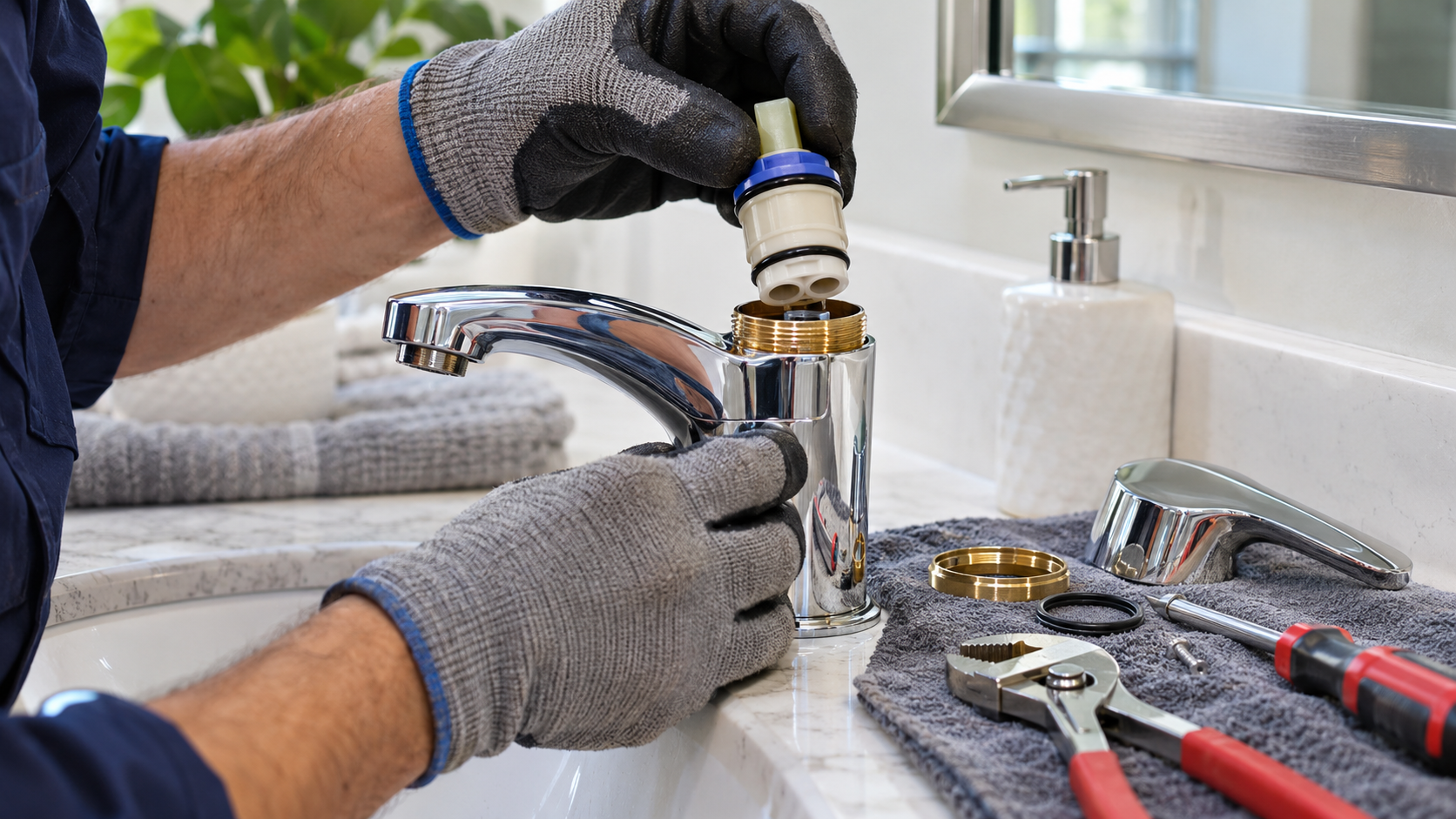
Repairing versus replacing a fixture
A repair is usually the practical choice when the fixture is in good condition and parts are available. Replacement is worth considering when a toilet bowl or tank is cracked, when a faucet body is corroded, when parts are discontinued, or when the fixture has needed repeated repairs. If you are already thinking about an update for comfort, water efficiency or style, a failing fixture can be a sensible time to make the change. We will tell you which applies, and explain our reasoning, as with all our residential plumbing services.
Running toilet or dripping faucet?
Tell us which fixture and what it is doing, and we will help you plan the repair.
When the symptom points somewhere else
Some problems that show up at a fixture actually start in the drain or the supply piping.
The toilet clogs often or the sink drains slowly
Repeated clogs with a working flush usually point to the drain line rather than the fixture.
Drain cleaningWater appears inside the wall behind a fixture
A stain behind a toilet or vanity with no visible drip may be a hidden supply or drain leak.
Leak detection and repairEvery faucet has weak flow
Low pressure throughout the house is a supply problem, not a faucet problem.
Water line repairToilet and faucet questions
Fixture-specific answers about running toilets, base leaks and dripping faucets.
A toilet that runs or refills on its own is usually losing water from the tank into the bowl. The most common cause is a flapper that no longer seals, often because it has warped or the chain is tangled. A fill valve set too high can also send water down the overflow tube. Either way, the water is wasted around the clock, so it is worth repairing even if the sound is faint.
It can be. Water at the base may come from a failed wax ring or seal between the toilet and the drain flange, which lets water and sewer gas escape under the fixture and can damage the subfloor over time. It may also be condensation or a drip from the supply line or tank bolts, which are simpler fixes. A rocking toilet makes a failed seal more likely and should be checked.
If the faucet is in good shape and parts are available, replacing a worn cartridge, washer or O-ring usually stops the drip at modest cost. Replacement makes more sense when the body is corroded or cracked, when parts for an older model cannot be found, when it has needed repeated repairs, or when you want a different style or function anyway.
Other plumbing services homeowners often need
Schedule toilet or faucet repair
Tell us which fixture is acting up and what you are seeing. A photo of the faucet or the inside of the toilet tank helps us prepare. Call to check availability.