
Water Line Repair in Mission Viejo
Weak pressure at every tap, a water meter that keeps turning when nothing is on, or a patch of ground that never dries. These point to the pressurized line that supplies your home. We locate the affected section and walk you through the options for main water supply line repair.
- Main and branch supply lines
- Valves and pressure checked
- Point repair or replacement options
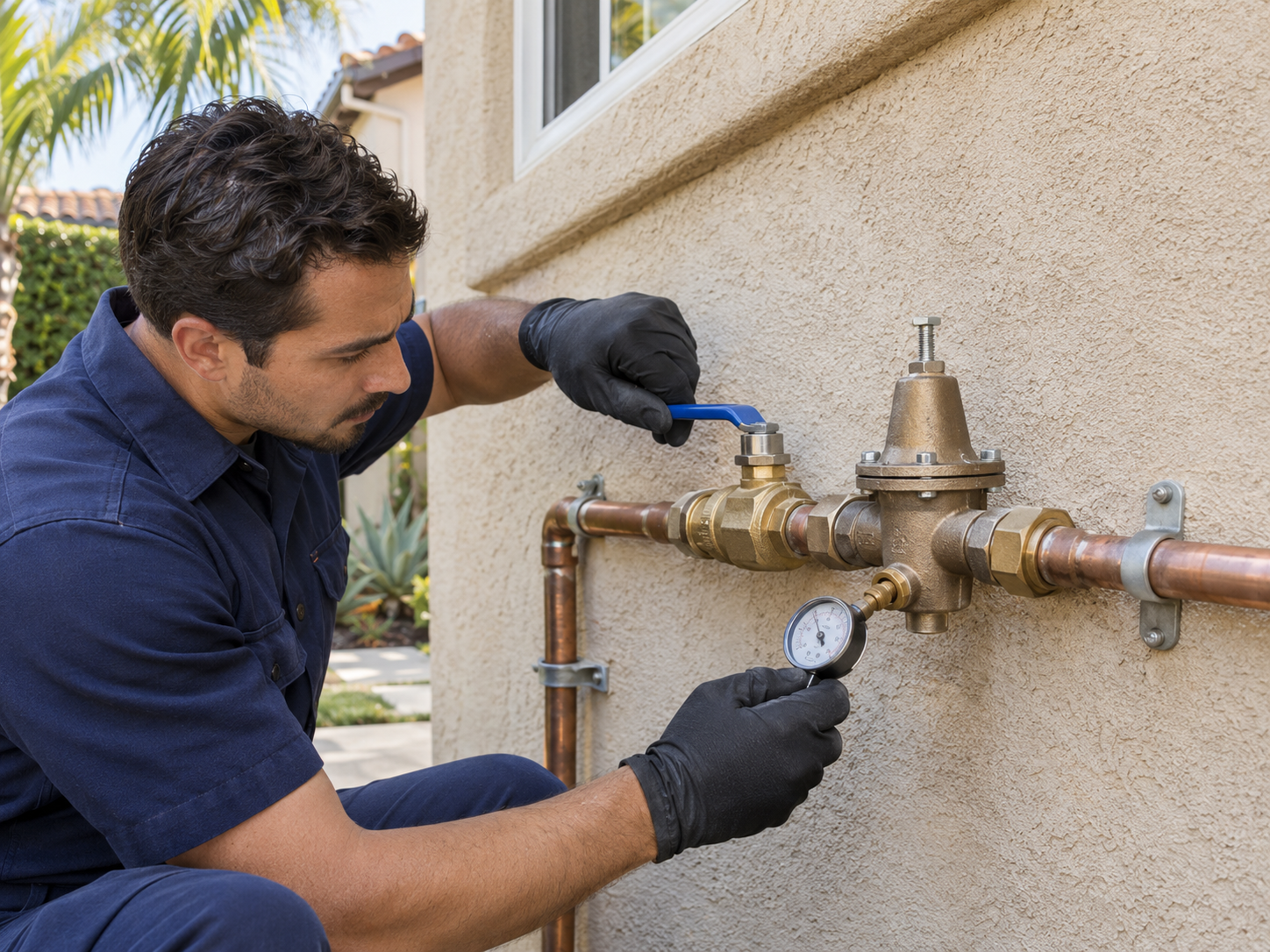
How we evaluate a water supply line
Supply line problems are found by working from the meter toward the fixtures, separating sections until the affected one is clear.
Confirm the symptom
We check pressure and flow at several fixtures and note whether the problem is house-wide, limited to hot or cold, or confined to one area.
Check the meter and valves
With fixtures off, the meter shows whether water is escaping. We look at the main shutoff and, where one is installed, the pressure regulator, since a failing valve can mimic a pipe problem.
Identify the affected section
Closing valves in sequence separates the service line outside from the piping inside, and one branch from another, narrowing where the leak or restriction sits.
Evaluate the line and access
We assess the pipe material and visible condition, how deep or hidden the section is, and what is built above it, then outline the repair paths.
Water supply problem or drain and sewer problem?
Both carry water, but they work in opposite ways and fail with different symptoms.
| Clue | Likely water supply issue | Likely drain or sewer issue |
|---|---|---|
| When it happens | All the time, whether or not water is in use | Only when fixtures are draining |
| Pressure and flow | Weak flow coming out of fixtures | Normal flow in, slow drainage out |
| Water meter | Moves with everything turned off | Usually unaffected |
| Wet area | Clean water, often persistent | Odor or discoloration, often after use |
| Where to go next | Water line evaluation, or leak detection for indoor leaks | Drain cleaning or sewer line repair |
What shapes the next step
Valves
A main shutoff that will not open fully, or a gate valve whose internal gate has dropped, can choke the whole house. Replacing a failing valve sometimes resolves what looked like a pipe problem, and it gives you a dependable way to shut off water in an emergency.
Pressure
Pressure that is too low frustrates daily use, while pressure that is too high strains pipes, fixtures and appliances and can contribute to repeated leaks. Where a regulator is installed, its condition matters as much as the pipe.
Location of the issue
A leak in the service line under the yard, a failure where the line enters the house and a problem in piping inside walls or below a slab each call for different access and repair methods. Where responsibility falls also depends on the confirmed location and the rules of your water provider and, if applicable, your HOA.
Pipe material and history
Supply lines may be copper, galvanized steel, PEX, CPVC or a combination, depending on when the home was built and what has been updated since. Each material ages differently. Galvanized pipe, for example, tends to narrow from internal buildup, which reduces flow gradually over years. Knowing the material, along with any history of earlier repairs, helps predict whether a single fix will hold or whether more failures are likely nearby.
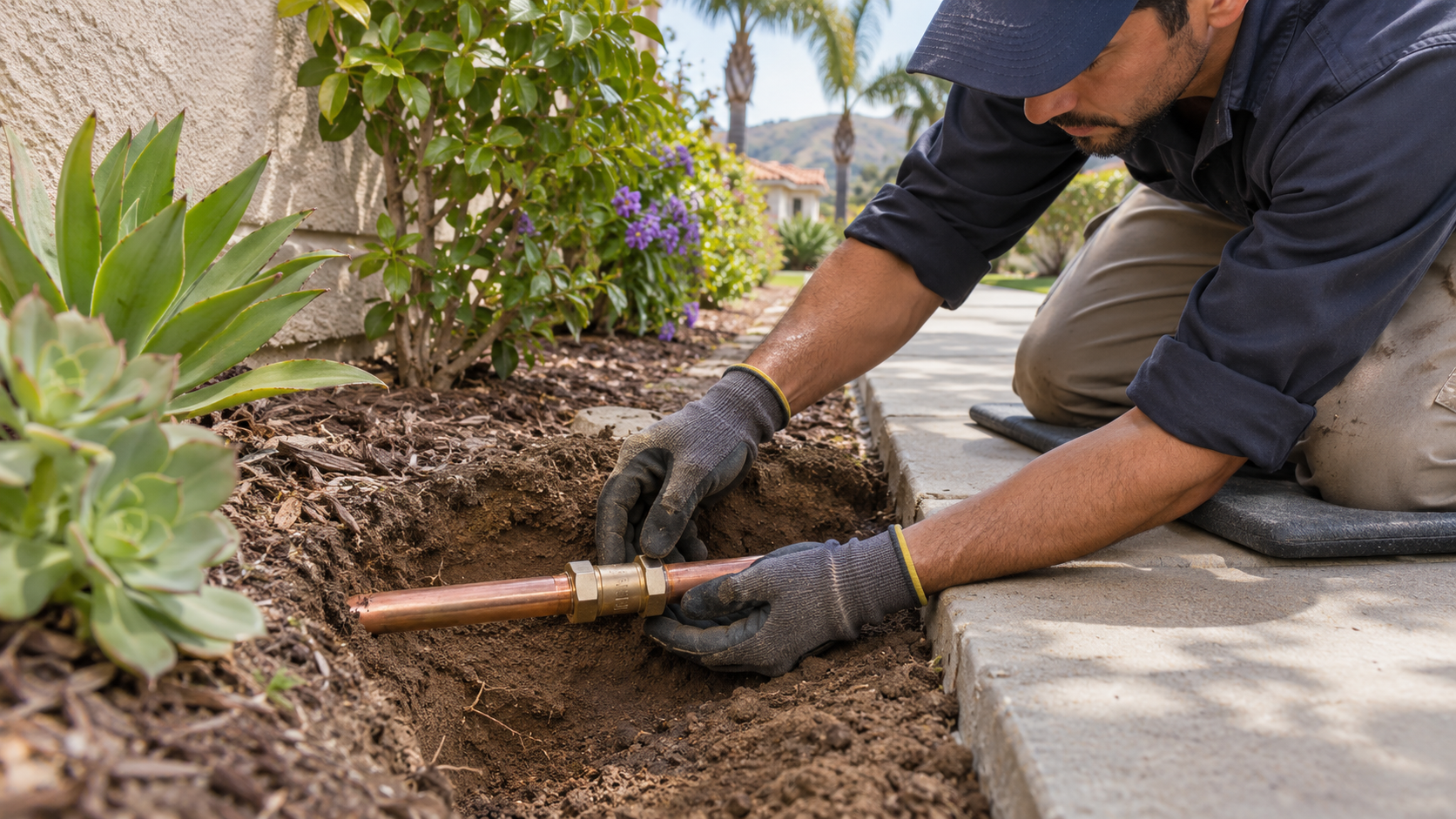
Leave buried lines to a professional
If you see water bubbling up in the yard, close the main shutoff if you can reach it and call. Digging near a pressurized line or other buried utilities can cause damage or injury.
Low pressure or a meter that will not stop?
Describe what you are seeing and we will help you plan an evaluation.
Point repair or water line replacement
Once the affected section is known, the choice comes down to the condition of the pipe around it and how the line has performed over time.
A point repair may fit when
- The failure is isolated, such as a single damaged section or fitting.
- The surrounding pipe is in sound condition.
- The line has not had previous failures.
- Flow and pressure are otherwise adequate.
Replacement may be the better path when
- The line has leaked or failed more than once.
- The pipe is corroded or deteriorating along its length.
- Buildup inside older pipe is restricting flow.
- Access for repeated repairs would be more disruptive over time.
Either way, we explain the access involved, what restoration may be needed and what each option solves, so you can decide with confidence. It is the same straightforward approach you will find across our residential plumbing services.
Water line questions
Answers about whole-house low pressure, supply line responsibility and repair versus replacement.
When every fixture is weak, the cause is usually upstream of them all. Common possibilities include a main shutoff valve that is not fully open or is failing internally, a pressure regulator that has worn out, mineral buildup or corrosion narrowing older piping, or a leak in the supply line that diverts water before it reaches the house. Checking pressure at the house and observing the meter helps tell these apart.
Typically the water provider maintains the meter and the service line up to a certain point, and the homeowner is responsible from there to the house, but the exact dividing point depends on the provider and the property. HOA documents can also assign responsibility for some shared lines. Once we know where the problem is, we can help you identify who to confirm it with.
A single failure in otherwise sound pipe can often be repaired at that spot. Replacement becomes the better option when the line has failed more than once, when the pipe material is corroded or deteriorating along its length, or when the existing line is too restricted to deliver adequate flow. An evaluation of the line condition near the failure helps make that call.
Other plumbing services homeowners often need
Request a water line evaluation
Let us know whether the issue is low pressure, a running meter or a wet area that will not dry. We will help you plan the next step and check availability.