
Water Heater Repair & Installation in Mission Viejo
No hot water, showers that turn lukewarm, popping sounds or a puddle around the tank. We diagnose the cause, tell you honestly whether a repair is worth it, and help you choose a replacement that suits your household when it is not.
- Tank water heater service
- Repair or replace guidance
- Sizing based on your household
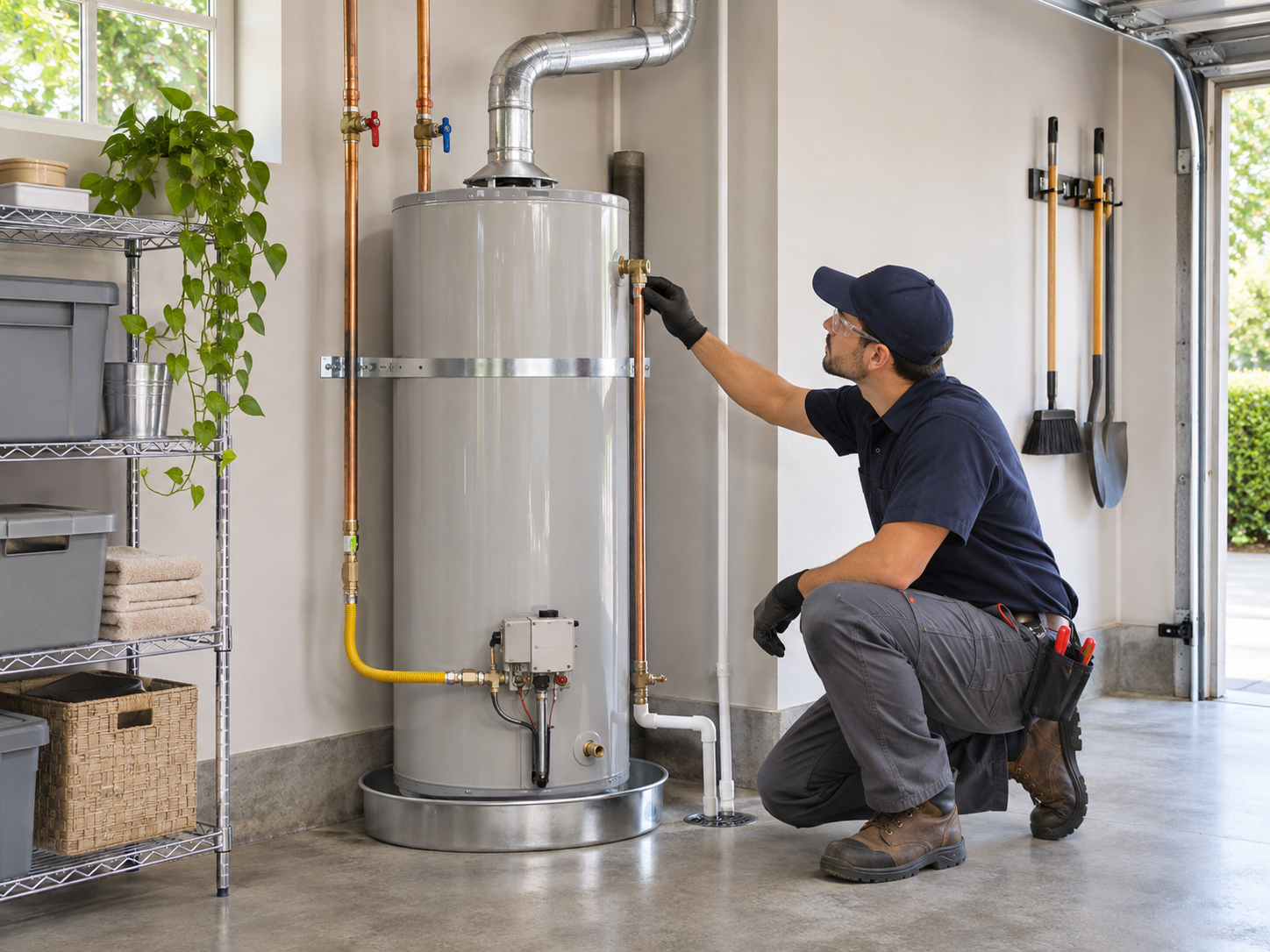
Common water heater problems and what they suggest
Most water heater calls fall into a few patterns. Understanding them helps you describe the problem and know what an inspection will look at.
No hot water at all
On a gas unit, this often traces to the ignition system, the pilot or burner assembly, a gas supply issue or a safety device that has shut the burner down. On an electric unit, a tripped breaker, a failed heating element or a faulty thermostat are the usual suspects. Diagnosis starts by confirming the unit is receiving fuel or power, then testing the components that control heating.
Inconsistent or lukewarm hot water
Hot water that fades halfway through a shower, swings in temperature or never gets fully hot can come from sediment buildup, a failing element, a thermostat out of calibration or a damaged dip tube. Sometimes the unit is working correctly but is undersized for the number of people and fixtures it now serves.
Water around the base
Not every puddle means the tank is finished. Loose fittings, a leaking drain valve or water discharged from the temperature and pressure relief valve are often repairable, although relief valve discharge needs to be understood because it can signal excessive temperature or pressure. Moisture coming from the tank shell itself typically means internal corrosion has broken through, and replacement is the only lasting fix.
Noises, odors and discolored water
Popping or rumbling usually comes from water trapped under sediment and boiling as it heats. A sulfur smell or rusty hot water can relate to the anode rod, the water supply or corrosion inside the tank. These symptoms do not always need urgent action, but they are worth assessing.
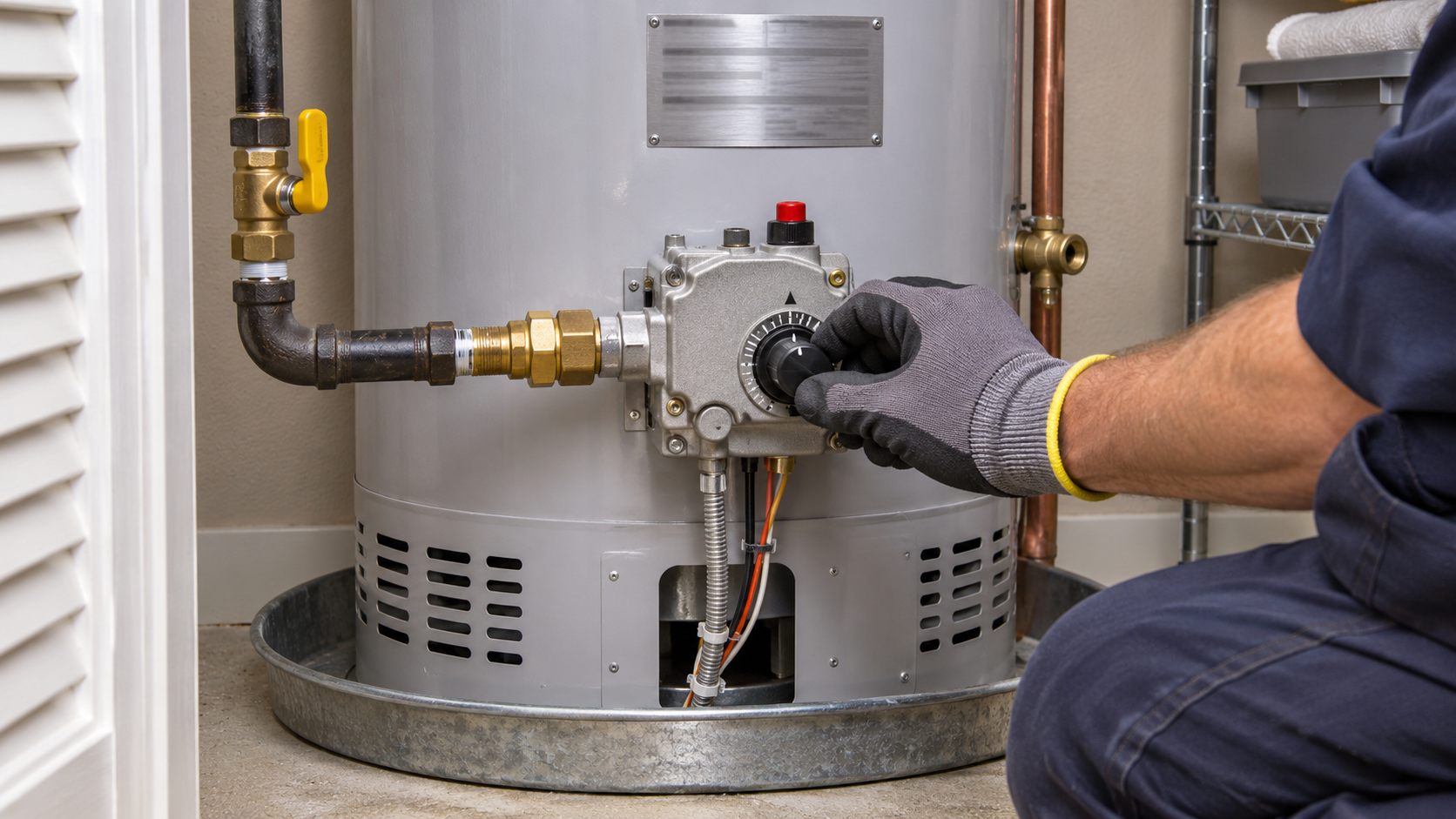
Gas, venting and electrical work
Water heaters involve combustion air, venting, gas connections or high-voltage wiring. Requirements vary by system and jurisdiction, and some replacements may need a permit. We confirm what applies to your installation rather than assuming.
No hot water or a leaking tank?
Tell us the brand, age and symptom and we will help you plan the next step.
Water heater repair versus water heater replacement
The decision rests on four things: what the diagnosis found, the overall condition of the unit, whether a replacement will fit your existing setup, and how much hot water your household actually uses.
Points toward hot water heater repair
- The failure is a replaceable component, such as an element, thermostat, igniter or valve.
- The tank shows no signs of corrosion or seepage.
- The unit has been reliable and is not near the end of its expected service life.
- Its capacity still meets your household's needs.
Points toward water heater replacement
- The tank itself is leaking or heavily corroded.
- Repairs have become frequent, or parts are difficult to source.
- The unit is older and a major component has failed.
- Your household has outgrown the unit's capacity or recovery rate.
Our role: we lay out what each choice involves and why, then let you decide. A sound repair is always on the table when it makes sense.
What goes into selecting a new water heater
A replacement is more than matching the old unit's size. These are the questions we work through with you.
Tank or tankless
Tank heaters store a ready supply of hot water and are usually simpler to swap like for like. Tankless units heat on demand and save space, but moving to one can require changes to gas supply, venting or electrical capacity. We discuss which suits your home and use.
Household size and habits
The number of bathrooms, overlapping showers, a large soaking tub or frequent laundry all affect how much hot water you need at once. Sizing to real demand avoids both shortages and wasted energy.
Fit with the existing setup
Fuel type, venting, the space available, the condition of supply valves and connections, and current requirements for things like seismic strapping and drain pans all shape the installation.
Care after installation
Periodic flushing where appropriate, checking the relief valve and watching for early signs of trouble help a new heater perform well. We explain the basics for your unit. More on how we work is available through our residential plumbing services.
Water heater questions
Answers about tank leaks, running out of hot water and what to tell us when you call.
First, find where the water is coming from. A drip at a fitting, valve or the temperature and pressure relief discharge line may be repairable. Water seeping from the tank body itself usually means the tank has failed and needs replacement. In either case, you can close the cold water supply valve above the heater to limit the flow. Leave gas and electrical shutoffs alone unless you know how to operate them safely, and call for service.
In a tank heater, sediment collecting at the bottom can take up space and insulate the water from the burner. On an electric unit, one of the two heating elements may have failed, leaving only part of the tank heating. A thermostat problem or a broken dip tube that mixes incoming cold water into the hot outlet can also shorten supply. A household that has grown may simply need more capacity.
Look for the label on the side of the unit and note the brand, model and serial number if you can. Tell us whether it is gas or electric, tank or tankless, roughly how old it is and where it is installed. Describe the symptom, such as no hot water, lukewarm water, leaking or unusual noise, and when it started. A photo of the label and the area around the heater is very helpful.
Other plumbing services homeowners often need
Request water heater service
Tell us what your water heater is doing and, if you can, its brand and approximate age. We will help you plan the next step and check availability.