
Usage
Unexplained water use
A bill that climbs month after month without more people, irrigation or new appliances often points to water escaping somewhere. Comparing bills from the same season last year makes the change easier to spot.
A hidden plumbing leak rarely announces itself. It shows up as a creeping water bill, a damp patch on drywall or the faint sound of running water at night. We trace pressurized leaks to their source and plan a repair that limits disruption to your home.
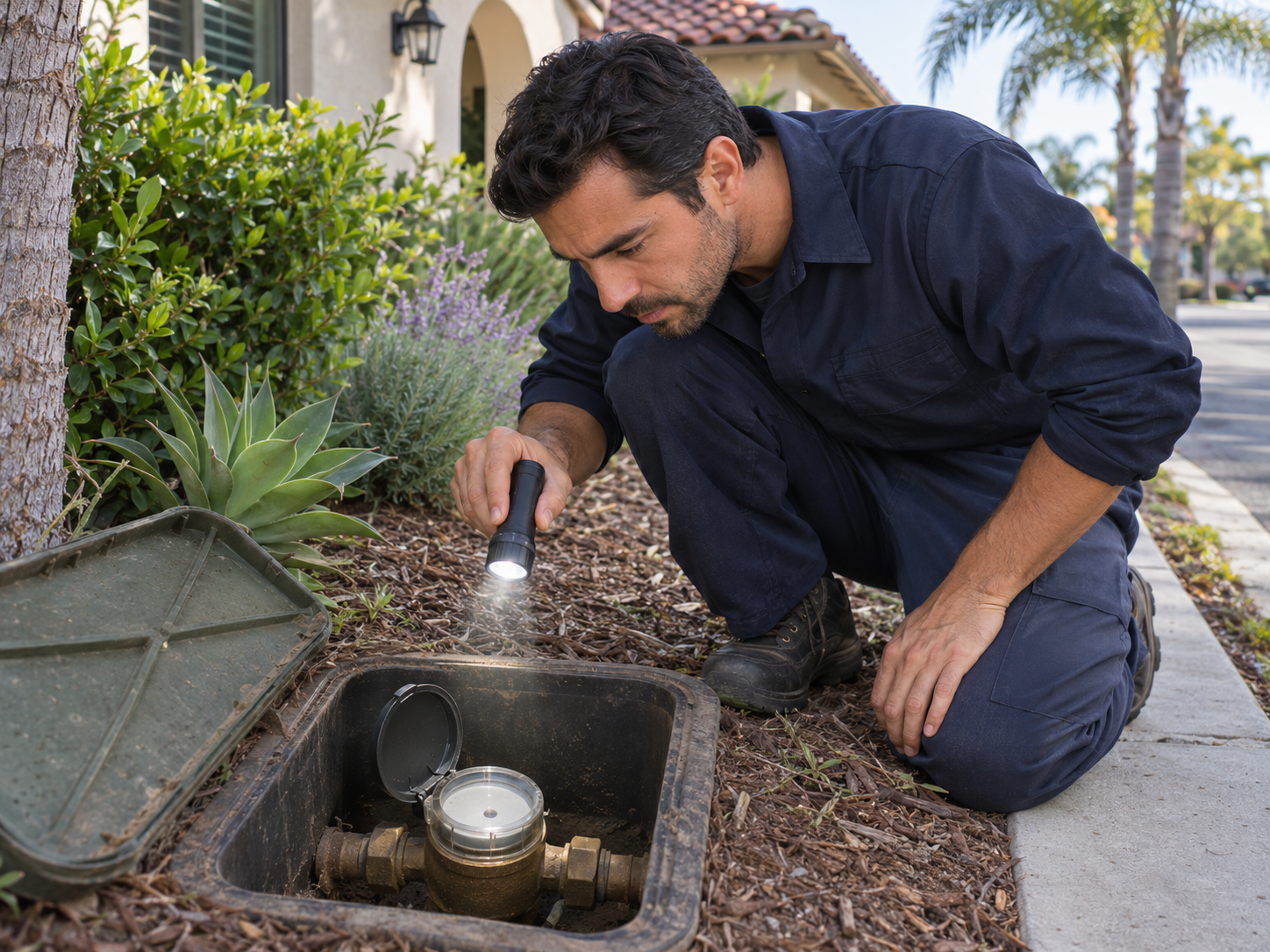
Pressurized water lines are under constant pressure, so even a small opening can release water around the clock. These are the clues homeowners notice most often.
A bill that climbs month after month without more people, irrigation or new appliances often points to water escaping somewhere. Comparing bills from the same season last year makes the change easier to spot.
Discolored drywall, bubbling paint, swollen baseboards or a cabinet floor that stays wet are signs that water is reaching places it should not. The wet spot is not always directly below the leak.
A hiss inside a wall, a trickle under the floor or a water heater that refills when no one has used hot water can all indicate a supply leak. Quiet nighttime hours make these sounds easier to hear.
A section of floor that feels warm, carpet that is damp at the edges or tile grout that darkens in one spot can suggest a line leaking beneath a concrete slab.
Leak detection works by ruling things out. Each step narrows where the water could be going until the source is clear.
With all fixtures off, we watch the water meter and its low-flow indicator. Movement confirms that water is leaving the system and gives a sense of how fast.
We check toilets, faucets, valves and appliance connections, closing local shutoffs one at a time. If the meter stops when a fixture is isolated, the leak is found without opening anything.
Closing the water heater supply separates hot lines from cold. This tells us which piping to follow and whether the water heater itself is involved.
Using methods suited to the situation and the home's layout, we follow the affected line to narrow the leak to a specific area before any access is planned.
Not all water inside a wall comes from the same place, and the difference matters for the repair.
Once the source is identified, the next questions are how to reach it and how to fix it. A leak at an exposed valve is often a quick repair. A pinhole in a line inside a finished wall or beneath a slab takes more planning.
Depending on the location and the condition of the surrounding pipe, options may include a spot repair at the leak, replacing a section of line, or rerouting the affected run through walls or the attic so the old line can be abandoned. Rerouting can avoid breaking into a slab, but it is not right for every home. We explain what each option involves, including access and patching, so you can choose with a full picture.
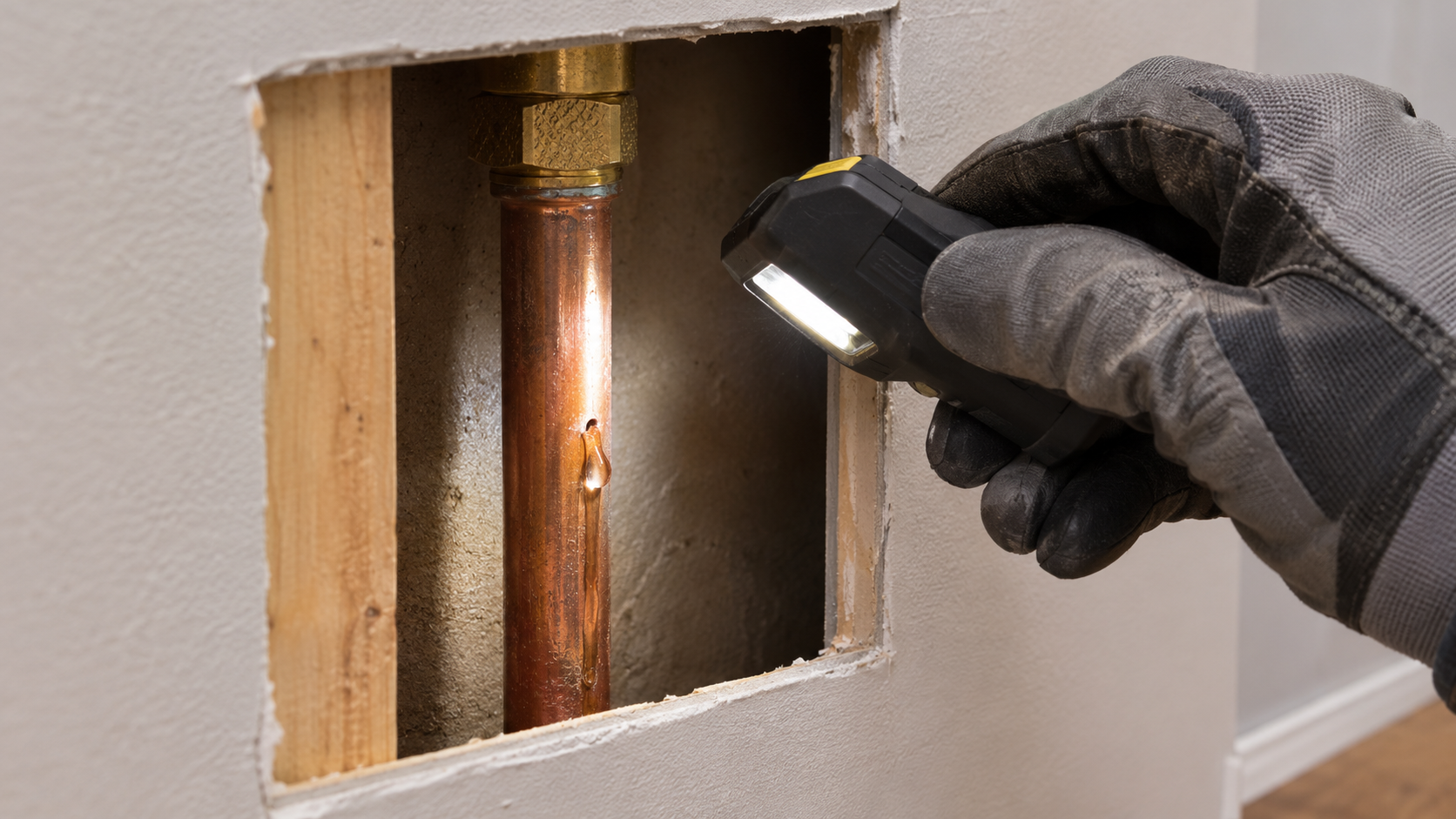
If you can see water escaping, close the nearest fixture shutoff or the main shutoff for the house. Move belongings away from wet areas and avoid opening walls yourself.
A leak repair is also a good moment to look at what caused it. High water pressure, aging fittings or a pipe material nearing the end of its life can mean more leaks ahead. We share what we see so you can plan, as part of the plumbing help for Mission Viejo homeowners we provide across every service.
Tell us what you have noticed and whether the meter moves with everything turned off.
What homeowners ask about hidden leaks, warm floors and how much access a repair needs.
Common clues include a water bill that rises without a change in your habits, the sound of water moving when every fixture is off, damp or stained drywall, warped baseboards, musty odors and flooring that lifts or feels soft. A simple check is to turn off all water use and watch the meter. If it keeps moving, water is going somewhere, and it is worth having the system checked.
A floor area that feels noticeably warmer than the rest of the room can indicate hot water escaping from a line routed beneath or within the floor. It is not the only possible explanation, since heating ducts and sunlight can also warm a floor, but combined with a running meter or a water heater that seems to run constantly, it is a strong reason to have the hot water lines evaluated.
Only as much as the repair requires. The goal of detection is to narrow the source to a specific area so that any opening is small and placed where it is needed. In some cases, rerouting a failed line rather than repairing it in place avoids opening a slab or a finished wall entirely. We explain the access options and their tradeoffs before any cutting is done.
Share what you are noticing, from a damp wall to a rising water bill. We will help you decide on the next step and check availability for a visit.